• Home
  • /
  • Clubs and Coaches

Clubs and Coaches

Making inclusion part of good karate

Karate Without Barriers begins in our clubs, dojos and training sessions, where our community comes together to learn and grow.

Clubs and coaches play a vital role in building welcoming environments where everyone can participate and develop their skills. Inclusion means recognising each karateka as an individual and being open to making reasonable adjustments that help more people take part. We do not expect coaches to be experts in every area, but we encourage a flexible approach that removes unnecessary barriers and supports every member of our community.

The English Karate Federation is dedicated to providing clubs, coaches and associations with practical guidance, trusted resources and learning opportunities to help make karate open and accessible for all.

Our approach is straightforward: we prioritise support over burden, practical action over words, and evidence over assumptions.
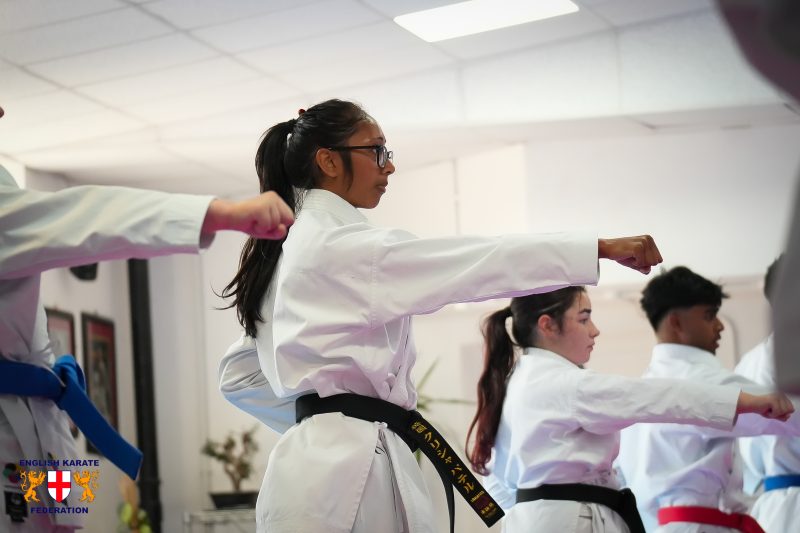
Inclusion starts with the karateka

When someone joins your club, start with the person, not the label.

A diagnosis, disability, faith, sexual orientation, cultural background or any other characteristic is only one part of a person. Each athlete brings their own perspective and experience to karate. Two people with the same diagnosis may need different levels of support, while someone else may not need any adjustments.

One of the most valuable questions a coach can ask is straightforward:

What helps you take part?

Sometimes, a simple conversation is all that is needed to help someone feel included and supported.

If an adjustment is needed, the goal is not to make karate easier or to set someone apart. It is to remove barriers so that everyone has a fair chance to take part, develop their skills and progress alongside others.

This approach reflects the EKF Diversity & Inclusion Action Plan, which recognises that inclusion is not about treating everyone identically, but about making appropriate adjustments to ensure fair opportunities for all.


Where to start?

Sport England and UK Coaching have developed some incredible resources to help get you started and provide useful information for inclusivity in clubs

Start with the karateka

Start with the karateka

Inclusive karate begins with the person in front of you.

You do not need to be an expert in every disability, identity, or community to be an inclusive coach. Start by speaking directly with karateka and asking:

What helps you take part?

One karateka may find it helpful to see a technique demonstrated and hear it explained. Another may need extra time to process instructions, a different way to communicate, or a physical adjustment. Someone else with the same diagnosis may not need any changes.

The aim is not to make karate easier or lower the standards. It is to remove unnecessary barriers so everyone has a fair chance to participate, develop, and progress.

This principle goes beyond disability and adjustments. Some people may wonder if they will fit into a karate club because of their age, culture, faith, ethnicity, sexual orientation, gender, financial circumstances, or because they have not seen many people like themselves represented in karate.

You do not need a complicated inclusion programme to make a difference. Make people feel welcome, communicate clearly, hear concerns, and help everyone feel comfortable asking questions so they feel Karate is a place where they belong.

EKF Coach & Club Resources

The EKF are proud to announce that after liaising closely with the National Disability Sports Organisation and other experts within the field of disability sport, we have a developed a range of guides available for coaches, which we hope will be of benefit. 

Many of these resources were originally published in 2021.

We are reviewing them as part of our new inclusion work. Useful guidance will remain available, while terminology, evidence, external references and recommendations will be updated where necessary.

Visual Impairments Karate Guide

Download

Hearing Impairment Karate Guide

Download

Down's Syndrome Karate Guide

Download

Autism and Karate Guide

Download

Wheelchair Coaching Guide

Download

Inclusive Competition Guide

Download

More support is coming

We want this section to grow with the needs of our clubs.

The EKF is developing an Inclusive Club Checklist to give clubs a straightforward way to assess areas such as communication, accessibility, club culture, reasonable adjustments, affordability, and progression.

We also intend to expand learning opportunities over time through resources such as webinars, workshops, Q&A sessions, and practical club development support.

We will start with what is useful and achievable, learn from clubs using it, and build from there.

Tell us what you need

You are the people delivering karate every week, so you are often the first to see where barriers exist and where better guidance could help.

If there is a situation you regularly encounter, training you would find useful, a resource you think is missing, or something your club already does particularly well, tell us.

What clubs and coaches tell us will help shape what the EKF develops next.


Support and Resources

We understand that every person is unique; we also understand that supporting somebody else can bring its own questions, pressures and uncertainties. Here is a page dedicated to additional resources covering other areas of inclusivity, as well as support for parents and carers. The English Karate Federation is committed to supporting everyone and enabling access to karate for as many people as possible.

© 2007-2026 English Karate Federation CIC