
• Home
  • /
  • Women & Girls in Karate

Women & Girls in Karate

Women and girls are already an important part of karate

Women and girls play an active and valued role across all levels of karate, from those beginning their journey in the dojo to experienced athletes, coaches, officials, and leaders.

As a community, we recognise these contributions and are committed to building on this strong foundation.

Our aim is not to treat women and girls as newcomers to karate. Instead, we seek to understand where barriers remain, why participation or progression may change at different stages, and how clubs and organisations can support women and girls to stay, develop, and progress in the sport.

We recognise that every woman and girl’s experience in sport is unique. Factors such as age, culture, disability, financial circumstances, confidence, caring responsibilities, and previous experiences all shape participation in different ways.

As with all our inclusion work, the best way forward is to listen to those taking part and avoid making assumptions about their needs.

This approach reflects the reality that women are already an integral part of karate, and ensures our efforts support their continued involvement and success.
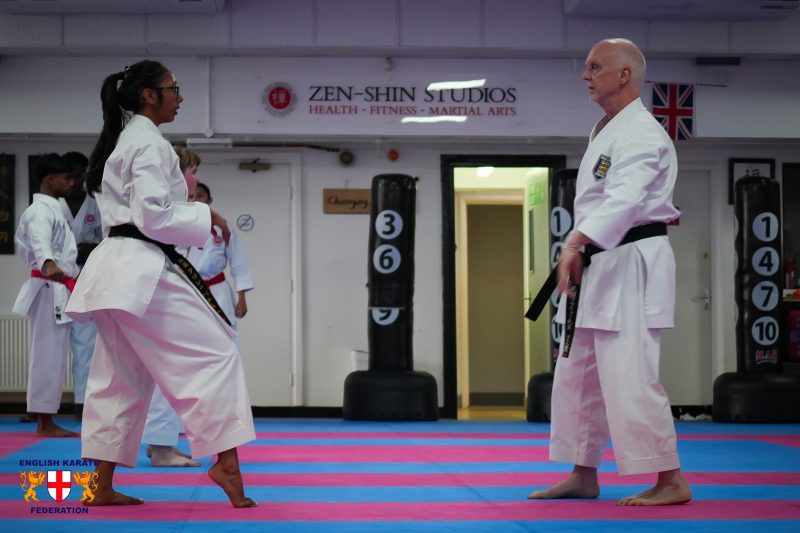
A place where women and girls feel safe

A place where women and girls feel safe

People are more likely to join and stay in an activity when they feel comfortable and safe.

People are more likely to join and stay in an activity when they feel comfortable and safe.

Clubs and instructors play a key role in making women and girls feel welcome from their first contact. This includes creating a positive dojo atmosphere, setting clear expectations for behaviour, communicating openly, and ensuring everyone feels confident that concerns will be heard and taken seriously.

Women-only classes can offer another way into karate for those who feel more comfortable starting in that environment, for personal or cultural reasons. These classes are an extra opportunity, not an assumption about what women want.

A safe club does not tolerate harassment, intimidation, sexualised behaviour or discrimination. These are never accepted as jokes or part of the environment.

Everyone in the dojo, from instructors to members, helps create that positive culture.

More than a physical activity

Karate is a martial art, but it offers much more than just fighting.

For women and girls, karate offers physical activity, practical self-defence, confidence, discipline and a strong sense of community. Whether you train for competition or recreation, karate can be both physically demanding and personally rewarding. Friendships grow in the dojo, confidence builds over time, and the discipline learned in karate shapes how we face challenges beyond training.

Karate is as much about mental discipline as physical skill. Everyone who steps into the dojo deserves respect and the chance to learn, grow and feel part of the community.

There is no single way to be a karateka. Whether you train once a month around other commitments or several times a week to compete, you are part of our karate community. Progress is personal, and karate should support each individual, not measure worth by medals, grades or training hours.

Karate is about the people who practise it.


Guides & useful resources

Our community does not end at the dojo door.

The benefits and responsibilities of our karate community continue beyond the dojo.

Women and girls can experience harassment, domestic abuse, sexual violence and concerns about their personal safety outside sport. The EKF cannot replace the specialist organisations, police, healthcare professionals or support services responsible for responding to those issues, and clubs should not be expected to become specialist services themselves.

Karate organisations still have an important role to play.

As our inclusion work grows, we aim to work with specialist organisations to make support easier to find, help clubs respond when someone asks for help, and find practical ways to make participation feel safer.

This could mean looking at how people travel to and from evening training, encouraging members to travel together, making sure everyone knows how to raise a concern confidentially, and making it easy to reach specialist support if something happens outside karate.

The principle is simple: if someone in our karate community needs support, we should help them find it.

Building better support

These resources are just the beginning as we continue to build a more inclusive karate community.

As we develop our inclusion work at EKF, we are committed to understanding the experiences of women and girls at every stage of their karate journey. We want to know not only who begins training but also who continues, who progresses, and where barriers may remain.

We will listen directly to women and girls, review our current guidance, and use evidence to identify what support and opportunities will truly make a difference. Where specialist organisations offer valuable expertise, we will connect our community to these resources. For karate-specific challenges, we will work together to develop new guidance and initiatives that meet our community’s needs.

We are committed to ensuring that women are visible and represented across all areas of karate, including as karateka, competitors, coaches, officials, volunteers and leaders.

© 2007-2026 English Karate Federation CIC